It will connect to a 2-kilometre-long ramp reaching a depth of 400 metres, providing access to the mining galleries for this strategic mineral.
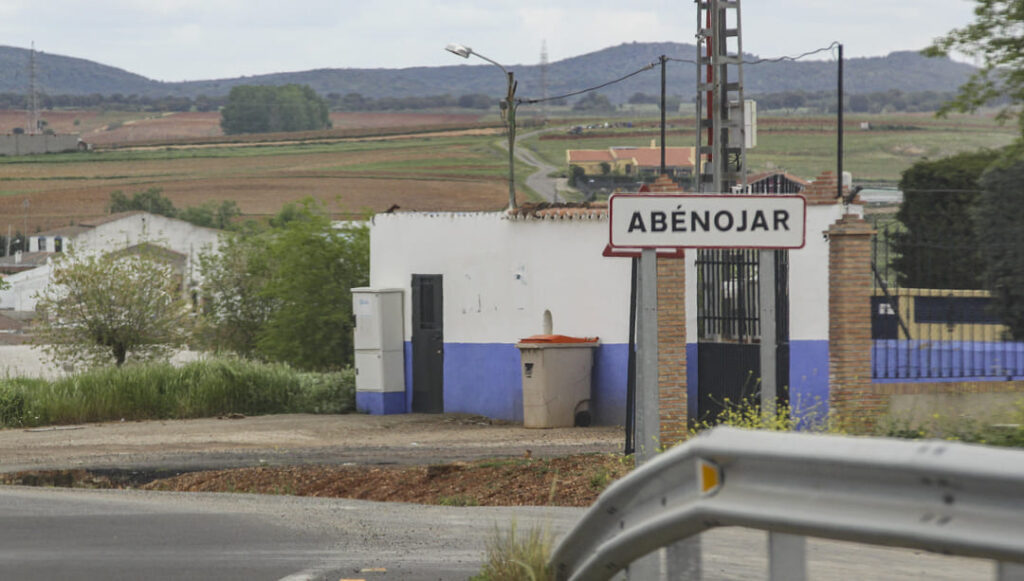
Sixteen years after the start of the tungsten exploration and exploitation project in Abenójar, construction of the access portal to the future mine has begun. In technical terms, this structure is known as the “portal”, and according to the town’s mayor, Verónica García, it will connect to an underground ramp that will be “2 kilometres long” and from which the various mining galleries will extend.
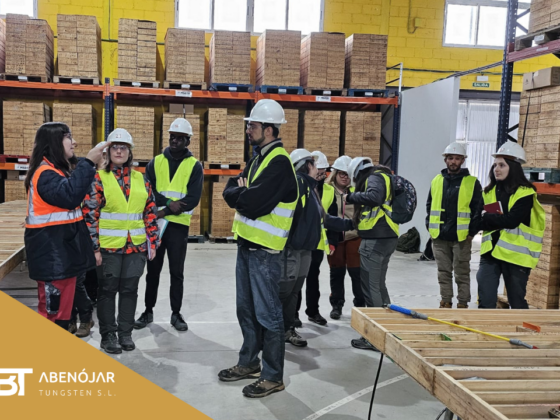
In recent months, companies from Abenójar have carried out earthworks, road accessibility improvements, tree pruning, and the installation of perimeter fencing across the hectares of the Virgen and Peñuela estates, where the deposit is located. They estimate that the “pre-operational” works prior to the start of mineral extraction will take approximately one year, reaching a depth of 400 metres.
Strategic mineral for manufacturing machinery
Considered a strategic mineral, tungsten is a grey-coloured metal that is extremely hard and dense. It gained significant prominence during World War II, when Nazi Germany used it to coat the tips of anti-tank projectiles and the armour of military vehicles. Today, it is used in machinery components that require high wear resistance and temperature resistance, as well as in television tubes and heating cables.
The mine is located in the western part of the province, according to mining engineer Pedro Aránguez, in one of Europe’s most important territories in terms of “mineral biodiversity”. In addition to mercury, which made Almadén the world’s leading producer, other strategic minerals such as titanium, zirconium, bismuth, phosphates, cobalt, nickel, and gold have been identified in this area of Ciudad Real.
Drilling after completing the environmental impact assessment
The project, backed by Spanish and foreign capital, successfully passed the environmental impact assessment in 2014. Since then, in addition to periodically renewing it in accordance with current legislation, the exploration process has continued, “with drilling campaigns across the entire site to determine the exact location of the tungsten within the geological layers,” explains Verónica García.
“The project has been underway for a long time, but it is progressing step by step due to administrative procedures and financing requirements,” adds the mayor, who points out that the extension of the deadlines is beyond the responsibility of the Town Council, which is in charge of granting construction permits and will subsequently issue the operating licence.
Mining is an economic driver already making an impact in the town
From the beginning, the residents of Abenójar, which currently has 1,375 inhabitants and whose economy is based on the primary sector, have welcomed “with a positive attitude” the arrival of mining in the town. García highlights that “people have traditionally made a living from mining, which has coexisted alongside agriculture and livestock farming.”
The mayor also notes that the local population recognises that “the operation is highly respectful of the environment, having met very stringent environmental regulations.” Furthermore, for sparsely populated areas such as Abenójar, which have been heavily affected by unemployment—particularly among women—the project represents “an economic boost.”
“It is clear that the mine will be beneficial for the local and regional economy. There are no opposing voices here,” the mayor adds. She also points out that the project is already having a positive socioeconomic impact, as mining engineers and geologists have been visiting the area in recent years, “using local hospitality services and staying in accommodation within the town.”
Support for mining in Almadén
For similar reasons, the Almadén Town Council unanimously approved a motion supporting the revival of mining in Almadén,
in line with a similar motion passed by the neighbouring municipality. The initiative aims to mobilise support for Spain’s Ministry of Industry to reactivate mining activities through the state-owned company MAYASA.
The mayor of Abenójar recalls that she met her counterpart in Almadén, Raquel Jurado, during a conference at the Autonomous University of Madrid. “Each of us presented our respective projects,” García explains. “On the one hand, a town seeking to revive its mining heritage after years of decline, and on the other, our municipality experiencing the first signs of growth driven by the initial stages of a new mining project.”
García therefore reiterates the wealth of mineral resources across the region and emphasises that Almadén has a long-standing mining tradition. For this reason, Abenójar supports Almadén’s mining-related initiatives, viewing them as “an opportunity for the future” and an important driver of the local economy.